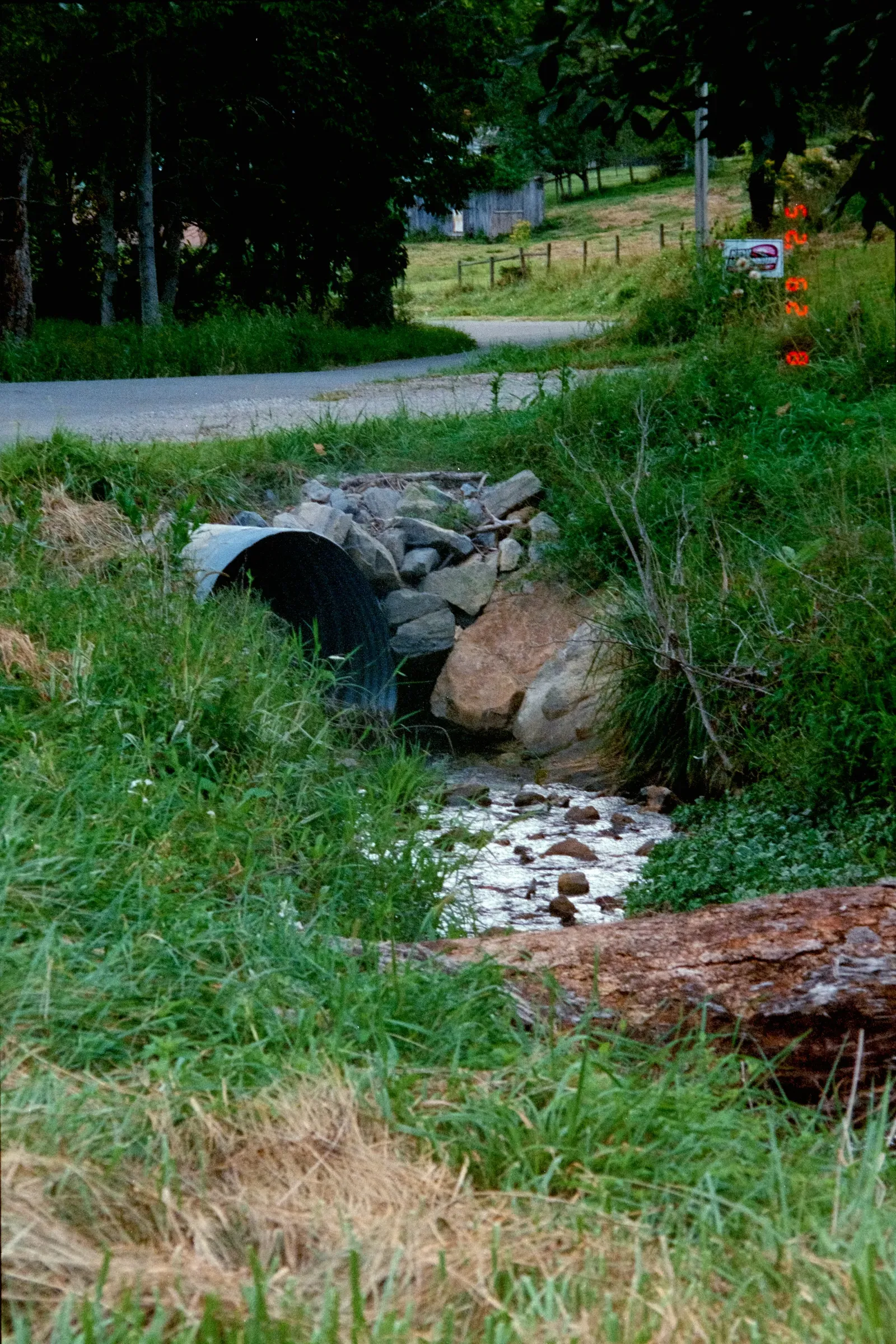
The same twelve feet of highway shoulder is four regulated objects at once. It is the line a fence has to hold to keep deer off the travel lanes. It is the surface that delivers zinc, chloride and tire-wear compounds to whatever water lies downhill. It is the ground a noise wall stands on, at the height where it first blocks a resident’s view of the traffic. And it is a seed bed, planted or volunteer, that either does or does not feed a pollinator in July.
Nothing coordinates those four. Each has its own legal instrument, its own trigger, its own definition of success and its own funding stream, and the instruments were written decades apart by different bodies for different reasons. That is the organizing fact of highway environmental work, and it explains most of what looks like inconsistency from outside.
Four instruments, one shoulder
Habitat connectivity runs on competitive grants. The Wildlife Crossings Pilot Program sits at 23 U.S.C. 171 with a five-year authorization rising from $60 million to $80 million a year, at least 60 percent of it reserved for rural projects. An agency that wants a crossing structure applies for one. The published monitoring behind those applications is stronger than most people assume and more specific than most citations allow, which is the subject of how wildlife crossings reduce animal-vehicle collisions. The short version is that the collision reduction tracks continuous fence length more closely than it tracks the number of structures, and that the US 93 corridor in Montana recorded a large reduction inside its mitigated sections alongside no reduction at all across the corridor as a whole.
Water runs on a permit, and it is the only one of the four that never stops. A state transportation department is a municipal separate storm sewer system in the Environmental Protection Agency’s terms, regulated alongside universities, hospitals and prisons as a non-traditional MS4, usually under a statewide general permit. That obligation applies whether or not anything is being built this year. What the permit was written to catch, and what it was not, is the argument in highway stormwater: where road runoff goes, which follows the constituents that behave least like each other: deicing chloride that leaves in baseflow months after the storm, and a tire-rubber transformation product lethal to coho salmon at concentrations below a tenth of a microgram per liter while leaving two closely related trout unaffected.
Noise runs on a project trigger. Under 23 CFR 772 the analysis attaches to a Type I job, meaning a highway on new location, an alteration that halves the distance between the traffic and the closest receptor or removes existing shielding, or the addition of a through lane. Absent one of those, the regulation has nothing to say about a road that has been loud since 1968, and the retrofit route was narrowed by a funding rule in 1995. The physics, the feasibility floor of 5 dB(A), and what the federal barrier inventory records across 3,866 linear miles of built wall are covered in highway noise barriers and how they work.
Roadside vegetation runs on two grant programs pulling against each other. The pollinator program at 23 U.S.C. 332 is authorized at $2 million a year nationally with a $150,000 ceiling per grant. The invasive plant program created in the same statute is authorized at $50 million a year. Roadsides as habitat works through what that ratio implies, what the monarch listing proposal actually says about vehicle strikes and roadside habitat, and why the acreage figure at the center of the argument comes in two sizes that differ by 7 million acres.
The live questions
The counting unit is where to start, because in three of these programs it has drifted away from the intervention. Crossing projects are announced in structures, since a structure photographs well, while the published evidence points at continuous fence length and at what happens where the fence stops. Noise abatement turns on cost per benefited receptor per decibel, a household-level test applied to a corridor-level decision. Roadside pollinator work is reported in acres seeded, and a seed mix that failed to establish counts the same as one that thrived.
Monitoring is the second problem, mostly because there is so little of it and because it punishes the agencies that do it. Corridors with control sections and multi-year camera records are the ones that publish reductions below the headline figures, benefit-cost analyses that do not clear their own costs on safety grounds, and survey results that double between one year and the next. An agency that measures carefully ends up looking worse than one that never measured, which is a poor incentive to leave standing in a field this dependent on published results.
Underneath both sits the difference between a trigger and a standing duty. Wildlife money arrives when an agency wins a competition. Noise analysis arrives when a project meets the definition of a Type I job. Pollinator practices arrive when a grant is awarded. The stormwater permit is simply always in force. That asymmetry decides where mitigation physically happens: on corridors already under reconstruction, in states carrying enough staff to write applications, and in the drainage system, which has to comply whether or not anyone is building.