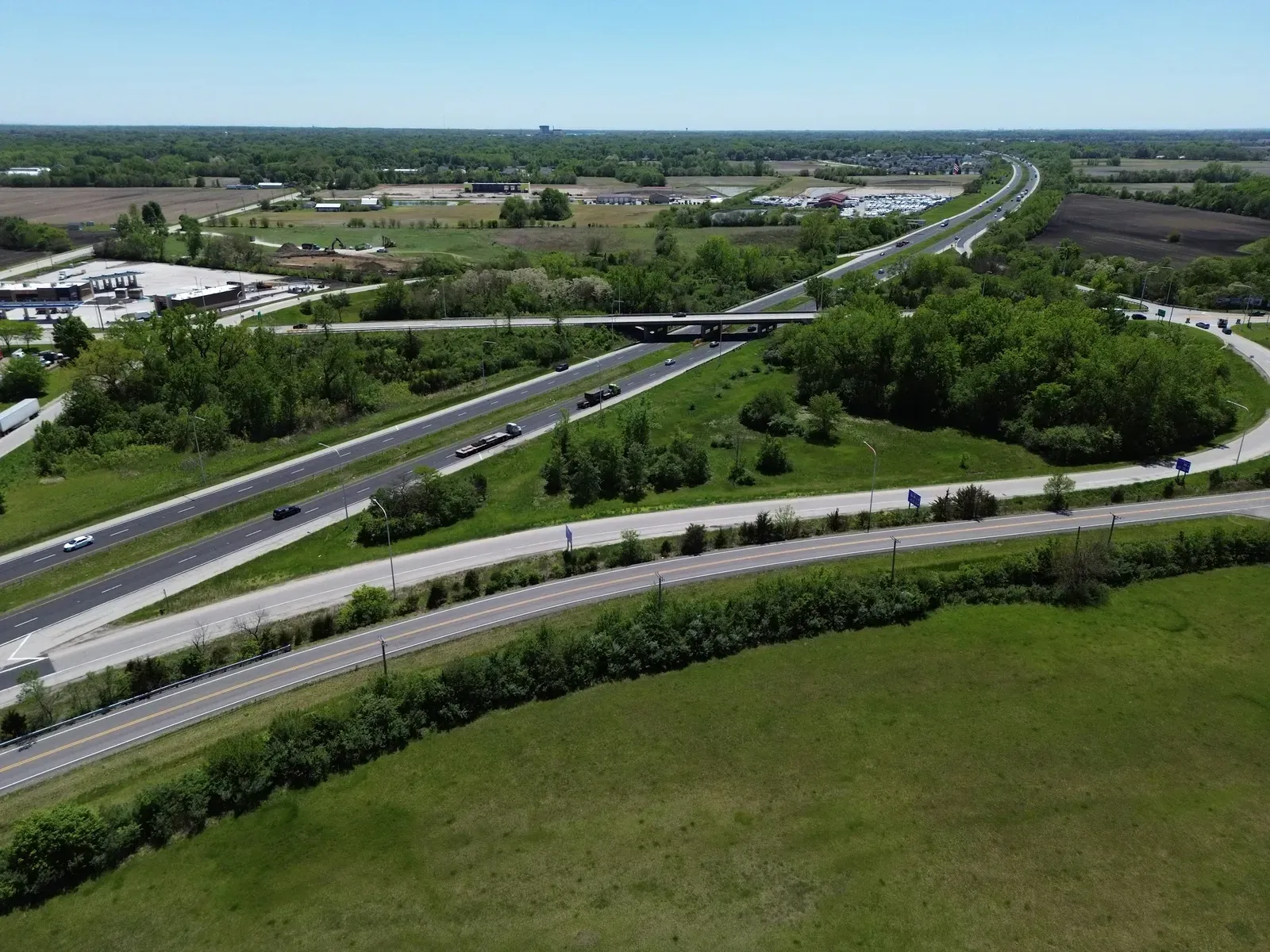
A highway is three things at once, and most writing about highways picks one and forgets the others. It is a structure, with layers and loads and a predictable way of coming apart. It is a line item, carried on a balance sheet across decades and repriced every time a bid is opened. And it is a legal object, existing only because a plan listed it, a program funded it, an environmental class of action cleared it and a certification released it for bidding. This section works on all three, because the interesting questions live where they meet.
The pattern that recurs is a mismatch between how confidently the public discussion states things and how carefully the source documents state them. Federal pavement policy occupies barely a paragraph of the Code of Federal Regulations and names no required service life at all. The single federal table most often cited for construction cost carries a spread of twenty-four to one inside itself, and the agency that published it says in the surrounding text that the values do not reflect the variation among projects of the same type. Interstate mileage has three defensible answers depending on whether the count is statutory ceiling, route designation or inventoried public road length. None of that is evasion by the agencies. It is what precision looks like on questions that have several legitimate answers, and the work of a publication like this one is to carry the precision through rather than round it off.
What the section covers
The definitional question comes first, because the term in the site’s name is contested and the agency whose scoring tool once set the American benchmark refused to write a universal definition. What makes a highway sustainable takes the criteria that FHWA’s own assessment tool actually weighted, reads them against real projects, and identifies what a point-based framework cannot score.
Then the temporal question. Design life and service life are different quantities measured against different thresholds, and conflating them produces most of the confusion about whether American roads are wearing out. How long a modern highway should last works from the definition of design life in FHWA’s remaining-service-life research, the condition thresholds in federal reporting, and the load equivalence factors that make a heavy axle disproportionately expensive.
The financial question follows, and it is the one readers arrive with. How much a mile of Interstate highway costs declines to give a single number and instead gives the four qualifiers any real number needs, the federal price index for repricing an old figure, and the state bid tabulations where an answer for a specific corridor can be assembled and sanity-checked.
Two procedural pieces cover the decisions. Which roads get rebuilt is governed by a performance and asset management framework with a real financial penalty behind it, examined in how state DOTs decide which roads to rebuild, which also looks at what the reported national condition figures can and cannot support. How a project gets from a twenty-year plan to a construction contract runs through how highway construction projects are planned, including the statutory review deadlines Congress imposed in 2023 and the certification gate that stops more schedules than environmental review does.
The historical piece closes the loop. The Interstate Highway System past and future reads the 1956 statute rather than the folklore about it, follows the fifteen cost estimates Congress commissioned between 1958 and 1991, and states plainly what the current authorization’s general-fund appropriations mean for the pay-as-you-go principle the system was sold on.
The questions that are genuinely open
Four arguments run underneath this coverage, and none of them has a settled answer.
The first is about horizon. The Interstate was specified against a traffic forecast for a single year, and the practice that replaced that approach sets a design period per facility class and an economic analysis period around it. Whether design periods should lengthen now that construction prices have risen sharply against the era when most current design manuals were calibrated is a live engineering and budget question, not a settled one.
The second is about the right lever. Federal law caps the share of Interstate lane miles allowed to be in Poor condition, and the reported data show almost no state anywhere near the cap. A binding constraint that binds nobody is doing no work. Whether the useful federal lever is a Poor ceiling, a Good floor, a preservation spending requirement or nothing at all is worth arguing about on the evidence.
The third is about comparability. States report four standardized metrics on a fixed calendar, and they manage their programs on indices that are not standardized, with FHWA-approved translations between them. That arrangement is reasonable and it limits how much weight state-to-state comparisons can bear.
The fourth is about revenue, and it is the one with a deadline attached. The current surface transportation authorization runs through fiscal 2026, and the account it draws on received a large general-fund appropriation to keep it solvent. The next reauthorization has to answer whether that becomes permanent practice, whether a new user-based revenue instrument replaces it, and what either choice does to the federal share that made the original system buildable.
Every claim here traces to a source listed on the page that makes it. Where a figure could not be verified against a primary document, the article says so and names the authority a reader should check.